
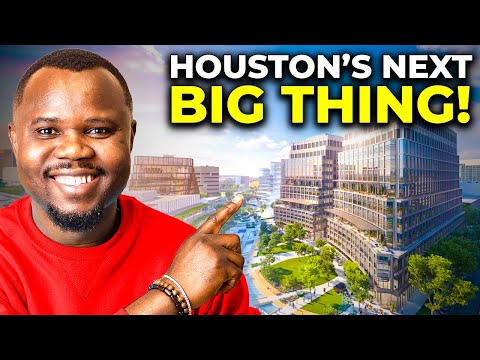
Houston is about to become unrecognizable.
And I’m not talking about cosmetic upgrades or trendy developments.
I’m talking about massive, structural changes—the kind that quietly create millionaires… and wipe out investors who fail to adapt.
Between now and 2028, Houston will:
- Host the world’s biggest global events
- Break population and job-growth records
- Complete multi-billion-dollar infrastructure projects
- Transform how 8+ million people live, work, and move
If you’re investing in Houston real estate—or even thinking about it—what you do next will matter more than ever.
I’m Wale Law, a Houston-based real estate broker and investor. I’ve helped 400+ buyers and investors build rental portfolios across Houston, and what I’m seeing right now is clear:
These 5 changes will either make you very wealthy—or cost you dearly if you ignore them.
Let’s break them down.
1. Explosive Population & Economic Growth (The Demand Tsunami)
Houston is experiencing the fastest growth in its history.
According to the Greater Houston Partnership, the metro added nearly 200,000 new residents in 2024 alone—that’s one new resident every 2.7 minutes.
- Metro population: ~7.8 million
- Larger than 37 U.S. states
- Housing demand growing faster than supply (2:1 ratio)
Major Projects Fueling This Growth
Smart investors are tracking where the money is going:
- $2B George R. Brown Convention Center expansion
Supporting the 2026 FIFA World Cup & 2028 RNC - $5.7B Generation Park facility expansion
600 permanent jobs + 2,000 construction jobs (starting 2025) - $400M Texas Heritage Marketplace (Katy)
Retail, medical, apartments, green space (completion by 2028) - $58.6M Grand Parkway expansion
Improved access from Fort Bend to Galveston - $12M Downtown Streetscape Transformation
Greenways, pedestrian corridors, urban density boost
Real Estate Impact
- Single-family rental demand up 10–15% YoY in Katy, Cypress, Pearland, Richmond, The Woodlands
- Apartment occupancy above 95% in high-growth corridors
- Home prices rising 4–6% annually, yet still ~28% below national average
Winners: Investors who buy before infrastructure completes
Losers: Investors waiting for “perfect timing”
2. Transportation Revolution (Accessibility = Appreciation)
Houston is no longer just a car city.
The METRO Next / METRO Now initiative represents a $3.5B transit overhaul, including:
- $10M micro-transit expansion (2025)
- 700+ fully accessible bus stops by end of 2025
- New rail maintenance facility (July 2026)
- $7M in security upgrades & police substations
- Solar + battery infrastructure with federal reimbursement
Investor Reality
Properties located:
- Within ½ mile of transit
- Near planned BRT routes
- Adjacent to walkable mixed-use zones
…are appreciating 6–8% faster than car-dependent areas.
Smart money is already positioning before these upgrades are completed.
3. Downtown & Urban Transformation (The Re-Urbanization Play)
Downtown Houston is being re-engineered, not renovated.
The George R. Brown Convention Center expansion alone includes:
- 700,000 sq ft of new development
- Texas’ largest ballroom
- Direct connection between Downtown & East End
- Central Plaza linking Discovery Green
- Completion by May 2028
This is not cosmetic growth—it’s structural demand creation.
Real Estate Effect
- Increased demand for condos, townhomes, and rentals
- Strong appreciation in East Downtown (EaDo) & surrounding districts
- Higher rents from professionals, corporate relocations, and event traffic
4. Global Events Are Putting Houston on the World Stage
Houston is officially a Tier-1 global city.
2026 FIFA World Cup
- 7 matches at NRG Stadium
- 500,000+ visitors over 20 days
- Estimated $1B economic impact
- Short-term rentals already booking 300–400% premiums
2028 Republican National Convention
- Tens of thousands of delegates & media
- Massive hotel, restaurant, and housing demand
- Global exposure for Houston real estate
Cities hosting World Cup events historically see 5–8% permanent property value increases post-event.
5. Climate Resilience & Flood Infrastructure (The Silent Killer)
Houston is finally taking flood risk seriously.
Since 2015:
- 6 federally declared flooding disasters
- 167% increase in heavy rainfall events
- 1/3 of major roads vulnerable to flooding
Billions are now being invested into:
- Drainage systems
- Flood mitigation projects
- Infrastructure resilience
Investor Reality Check
- Flood risk directly impacts insurance costs
- Poor location choices can erase 20–30% of cash flow
- Smart investors are avoiding:
- 100-year flood plains
- 500-year flood zones
- Poor drainage submarkets
Flood-safe location selection is now non-negotiable.
Millionaires vs. Bankrupt Investors: The Difference
The difference isn’t luck.
It’s positioning + timing + execution.
Houston still offers:
- Cash-flowing rentals ($400K homes producing ~$600/month)
- Below-average home prices
- Strong job & population growth
- Corporate relocations driving high-end rental demand
But the window is closing fast.
Where Smart Investors Are Buying
- East Downtown & Inner-Loop infrastructure corridors
- Energy Corridor & job-dense areas
- Katy, Cypress, Richmond (safe growth plays)
- Transit-adjacent zones with future demand
Ready to Position Yourself the Right Way?
If you’re serious about:
- Buying in the right Houston submarkets
- Avoiding expensive mistakes
- Building long-term wealth through rental real estate
I’d be happy to help.
Call, Text, or Email Me — Let’s Build a Smart Strategy
Call or Text: 832-776-9582
Call, Text, or Email Anytime
Email: Wale@NetworthBuilders.com
I’ll help you:
- Identify high-growth zones
- Analyze deals correctly
- Avoid flood & zoning pitfalls
- Build a portfolio positioned for the next decade—not the last one
The question isn’t whether Houston will change.
The question is whether you’ll be positioned to benefit from it.